
Why Do So Many Christians Feel Spiritually Empty?
What the Church Has Always Offered to a Restless World
Many Christians today feel exhausted, distracted, and spiritually disconnected.
Some quietly wonder why faith no longer feels alive. Others feel overwhelmed by anxiety, loneliness, or the constant noise of modern life. Even among regular churchgoers, there is often a lingering sense that something deeper is missing.
These struggles are not uncommon. In fact, many people searching online are asking questions like:
- Why do I feel distant from God?
- How do I grow spiritually?
- Why does church feel empty?
- What is the purpose of the Church today?
Behind many of those questions is a deeper longing—not merely for inspiration, but for stability, meaning, and communion with God.
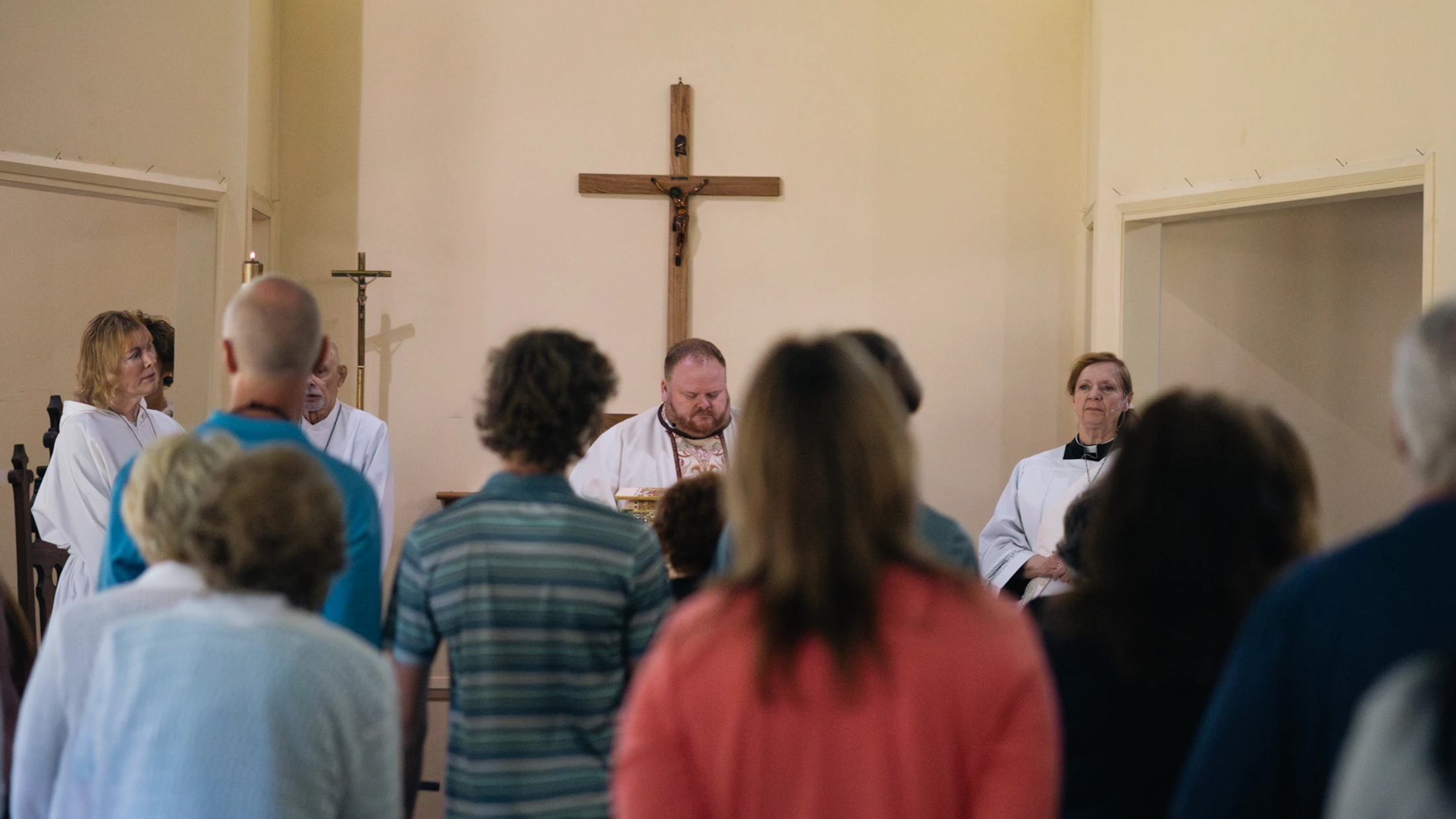
In his recent sermon at St. Dunstan’s Anglican Church, Bishop Morales reflected on three words that speak directly into that longing: rooted, missional, and compassionate. Though simple, these themes point toward something many modern Christians have lost sight of: the Christian life was never meant to be invented from scratch by every generation. It was meant to be received, lived, and handed down faithfully within the life of the Church.
The Modern Problem: Christians Without Roots
One of the defining struggles of modern life is instability.
People move constantly, relationships fracture easily, attention spans shorten, and much of life is lived online rather than face-to-face. Even spiritually, many Christians drift from sermon to sermon, podcast to podcast, searching for something that finally feels solid.
Bishop Morales described the Christian life using the image of roots firmly attached to the soil. A healthy tree draws nourishment from what it is rooted in. In the same way, Christians are called to remain rooted in Jesus Christ through worship, Scripture, prayer, and the sacraments of the Church.
This is part of why historic Christianity places such importance on ordinary things that can initially seem unimpressive: water, bread, wine, oil, spoken prayers, gathered worship, and the reading of Scripture. Christianity has always insisted that God works through these humble means to sustain His people.
In a culture obsessed with novelty and constant reinvention, the Church offers something profoundly different: continuity. Week after week, Christians gather not to create a new faith, but to receive again the life of Christ.
That rootedness matters because spiritual maturity does not usually grow through dramatic emotional experiences. More often, it grows quietly through faithfulness, worship, repentance, prayer, and long obedience over time.
Christianity Was Never Intended to Remain Private
Many people today approach faith primarily as a personal or internal experience. Yet throughout the New Testament, Christians are continually sent outward into the world.
Bishop Morales emphasized that the Church is called to be missional—not only through overseas missions or public preaching, but through the ordinary witness of Christian lives shaped by Christ Himself.
- patience instead of outrage,
- generosity instead of selfishness,
- compassion instead of indifference,
- peace instead of bitterness.
The early Church spread across the ancient world not because Christians possessed cultural power, but because their lives reflected something different. They cared for the poor, remained faithful during suffering, forgave enemies, and embodied a kind of hope that could not easily be explained.
That witness still matters.
Many people are not searching for perfect churches. They are searching for communities where the love of Christ is genuinely visible.
Compassion Requires More Than Good Intentions
Modern life has also left many people profoundly isolated. Anxiety, addiction, grief, depression, and loneliness affect countless people both inside and outside the Church.
Christian compassion must reach deeper than politeness.
In his sermon, Bishop Morales spoke about compassion not merely as charity, but as entering into the burdens and struggles of other people with the love of Christ. Sometimes that means providing practical help. Other times it means listening patiently, praying faithfully, or simply refusing to abandon someone in their suffering.
Jesus consistently moved toward wounded people. Again and again throughout the Gospels, He drew near to the sick, the grieving, the ashamed, and the forgotten.
The Church is called to do the same.
In an age where many people feel unseen, genuine Christian compassion becomes a powerful witness to the presence of God.
Why the Church Still Matters
Many people today have become skeptical of the Church because of disappointment, division, hypocrisy, or pain. Those wounds should not be dismissed lightly.
And yet, despite human failures, the Church remains the place where Christians gather around Word and Sacrament, where believers worship together, pray together, bear one another’s burdens, and learn to follow Christ together across generations.
Near the end of his sermon, Bishop Morales reflected on the generations of faithful Christians who sacrificed, persevered, and endured hardship so that future believers would still have a place to worship. That inheritance reminds us that Christianity has never been merely about individual spirituality. It is about being joined to the life of Christ and to His people.
For those feeling spiritually weary, disconnected, or uncertain, the answer may not be found in chasing something entirely new.
It may be found in recovering the ancient Christian life the Church has carried all along: a life rooted in Christ, shaped by His mission, and transformed by His compassion.
We'd love to have you join us at St. Dunstan's. If those longings resonate with you — if you've ever felt like something is missing and wondered where that feeling points — you are welcome here, exactly as you are. Click the button below to plan your visit. You can also read, watch, or listen to Fr. Michael's full sermon on this topic over on his Substack if you want to go deeper.